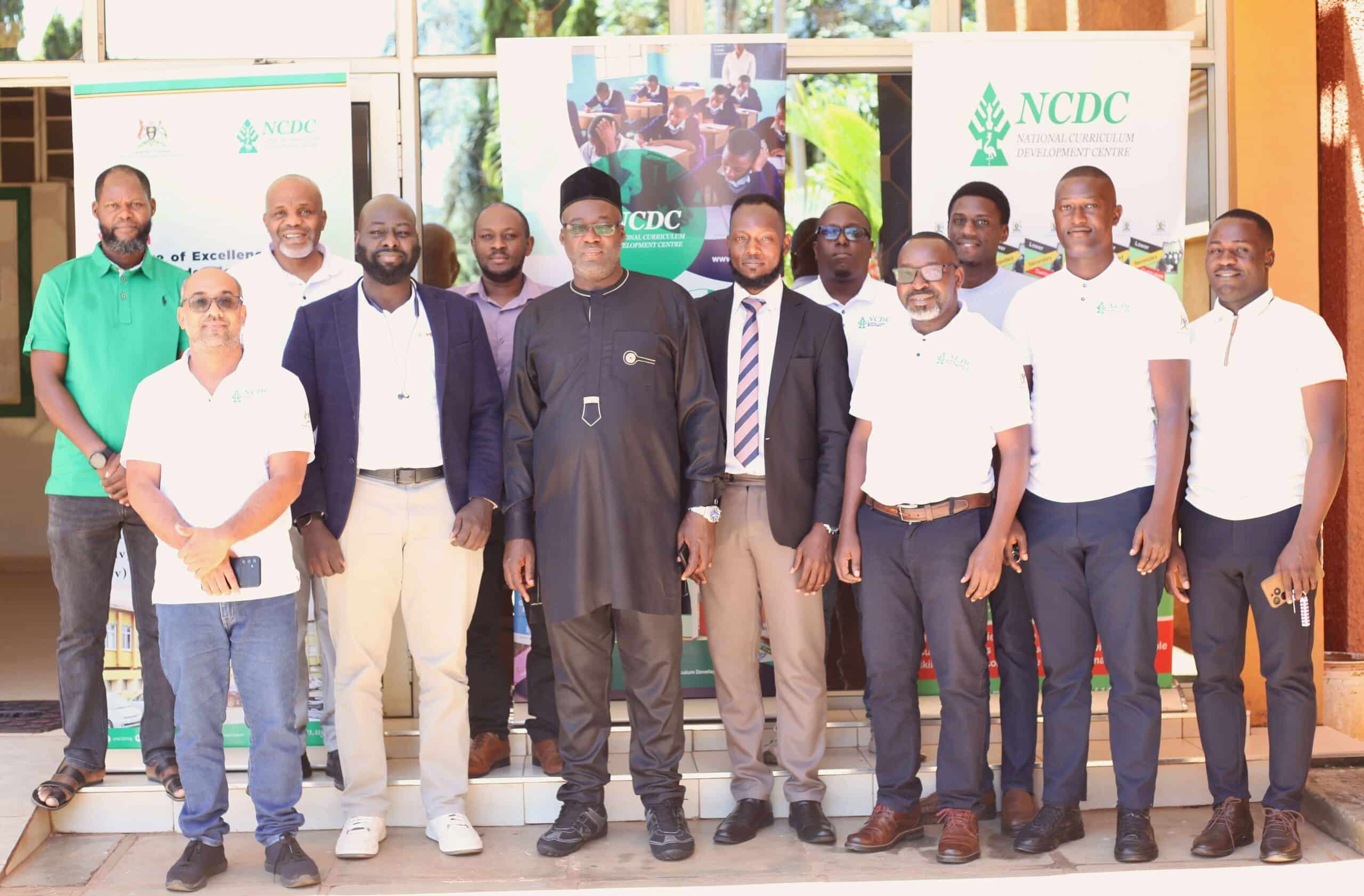
The National Curriculum Development Centre (NCDC) has held an institutional engagement with AfriXR, an immersive technology company, to explore opportunities for integrating Virtual Reality (VR) and other immersive technologies into teaching, learning and skills development.
The meeting, held at the NCDC headquarters in Kampala, was attended by the Director, Dr Bernadette N.Karuhanga; Deputy Director Research, Consultancy and Library Services, Dr Richard Irumba; Manager ICT and Multimedia Services, Dr Tuhame Moses; and members of the ICT and Multimedia Department. The AfriXR team was led by its Chief Executive Officer, Kansiime Amuza.
The engagement provided an opportunity for AfriXR to introduce its virtual reality learning platform and demonstrate how immersive technologies can complement conventional teaching methods through interactive, practical and experiential learning.
AfriXR develops Augmented Reality (AR) and Virtual Reality (VR) solutions for educational institutions, including schools, universities and technical training institutions. Its platform enables learners to interact with three-dimensional (3D) models, simulations and virtual learning environments to explore concepts and practise skills that may otherwise be difficult, expensive or impractical to demonstrate in conventional classroom settings.
U24 is designed to serve learners from pre-primary to tertiary level, with programming focusing on education and youth participation. Its programmes include Science in Motion Innotec, U24 Doctor, The Film Spot, Be Money Wiser, Girl Power andBoys to Men, covering science, innovation, health, financial literacy, mentorship and talent development.
During the engagement, the company highlighted some of the challenges facing practical and STEM education, including the high cost of physical laboratories and specialised equipment, difficulties learners experience in visualising complex scientific and technical concepts, and limited internet connectivity in some learning environments.
To address these challenges, AfriXR presented its platform’s capabilities, including immersive virtual laboratories and 3D models, offline functionality, interactive lesson development tools and data-saving features designed to support learning in low-bandwidth environments. The platform also allows educators to access existing learning resources, customise lessons, incorporate quizzes and assign structured coursework.
The discussions also explored how virtual reality learning experiences could be aligned with Uganda’s curriculum requirements and integrated into existing educational programmes. Particular attention was given to curriculum alignment, assessment, quality assurance and the applicable approval requirements for introducing technology-based learning solutions into the education system.
The engagement further considered potential areas of collaboration, including technical guidance, expert review and pilot implementation with selected educational institutions to assess the relevance and effectiveness of immersive learning technologies in the Ugandan education context.
The engagement reflects NCDC’s interest in exploring innovative approaches that can enrich teaching and learning, strengthen practical skills development and support the effective use of technology in education.
As Uganda continues to advance competency-based education, emerging technologies such as virtual reality present opportunities to make learning more interactive, learner-centred and connected to real-world experiences. Their adoption, however, requires careful consideration of curriculum relevance, accessibility, infrastructure, assessment and quality assurance to ensure that technology meaningfully contributes to learning outcomes.