
Office of the Director
Responsible for curriculum design, review, implementation and alignment.
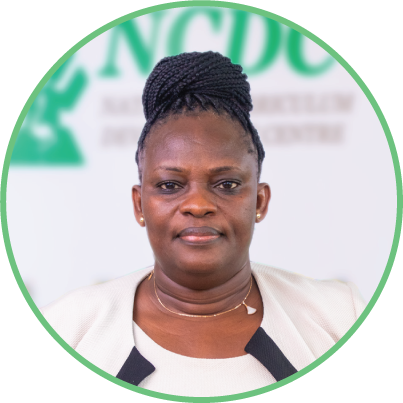
Dr. Bernadette N. Karuhanga
Director
Director

Dr. Richard Irumba
Deputy Director Research, Consultancy & Library Services
Deputy Director Research, Consultancy & Library Services
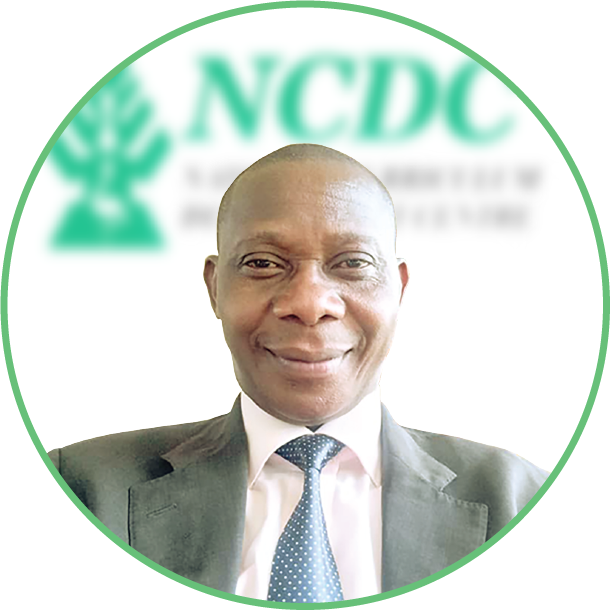
Dr. Patrice Ssembirige
Deputy Director Curriculum Review & Instructional Materials Development
Deputy Director Curriculum Review & Instructional Materials Development
Departments
Functions of Finance Department
- Manage and coordinate all procurement and disposal activities of the Ministry.
- Act as a secretariat and support the functionality of the contracts committeee.
- Act as representative and liaison of the PPDA.
- Support the functioning and implement the decisions of the Procurement Authority.
- Prepare tendering documents and advertise the tender opportunities.
- Providing technical guidance to the Missions on procurement and disposal matters.
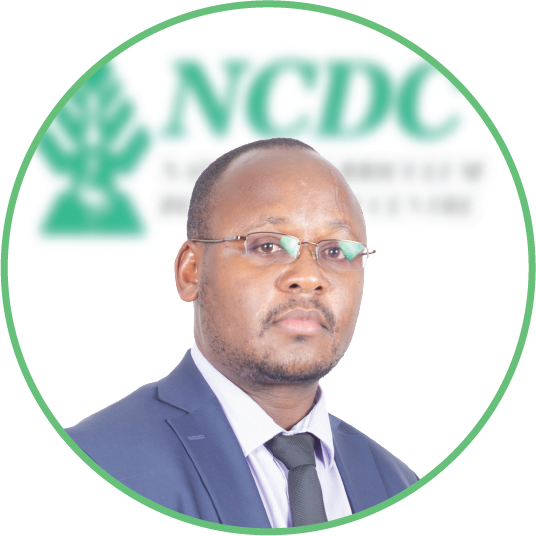
MCIPS Livingston Rugasira
Head, Procurement & Disposal Unit
Head, Procurement & Disposal Unit
Functions
Plans, directs, oversees and coordinates the Human Resource and Administrative function at the Centre. Coordinates the designing and implementation of effective regular reviews of Human Resource policies, procedures and programmes for harmonious working relationships. Develops and coordinates employee induction and on the job- orientation courses aimed at providing employees with relevant information about their work and the Centre. Conducts training needs assessments and prepares staff Training and Development programmes under the guidance of the Human Resource Management.
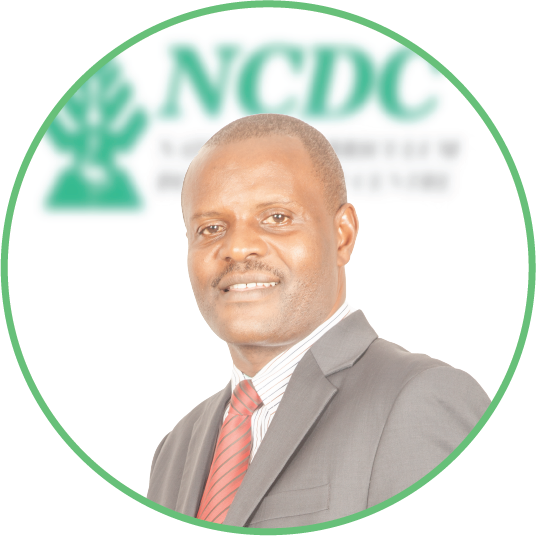
Habiyaremye John
Manager, HR and Admin
Manager, HR and Admin
Functions of Internal Audit
- Verify the existence of assets and recommend proper safeguards for their protection.
- Evaluate the adequacy of the system of internal controls.
- Recommend improvements in controls.
- Assess compliance with policies and procedures and sound business practices.
- Assess compliance with laws and contractual obligations.
- Review operations/programs to ascertain whether results are consistent with established objectives and whether the operations/programs are being carried out as planned.
- Investigate reported occurrences mismanagement of resources.
- Act as consultancy Unit of the Centre, etc.
Reporting structure of the Internal Audit function
The Internal Audit function has two reporting lines: to the Governing Council through the Audit and Risk Assurance Committee; administratively and to the Director/Accounting Officer. However, in accordance with the Public Finance Management Act (PFMA), 2015 (as amended), Internal Audit functionally also reports to the Sector Audit Committee and the Internal Auditor General (IAG).
CPA John Mary Kisembo
Chief Internal Auditor
Chief Internal Auditor
Reporting structure of the Internal Audit function
The Internal Audit function has two reporting lines: to the Governing Council through the Audit and Risk Assurance Committee; administratively and to the Director/Accounting Officer. However, in accordance with the Public Finance Management Act (PFMA), 2015 (as amended), Internal Audit functionally also reports to the Sector Audit Committee and the Internal Auditor General (IAG).
Functions of Finance Department
- Obtaining and handling any monies on behalf of the NCDC.
- The department controls the income and expenditure in addition to ensuring effective business running with minimum disruptions.
- Handles the payroll, income and expenses.
- Conducts cost-benefit analysis to improve key business strategies.
- Keeps and manages all account records of NCDC.
- Reconciles NCDC’s financial registers to make suitable business decisions.
- Bookkeeping and income statement preparations.
- Manages statutory deductions from employees.
- Filing requisite financial data to the auditors and Ministry of Finance.
- Plans and implements the NCDC's financial year budget.
- Conducts research and collects data to use in temporary and permanent financial forecasts.
- Plans for acquiring, updating and maintaining the latest operations systems to improve efficiency.

CPA Kwiri Stephen
Manager, Finance
Manager, Finance
Purpose
To design and guide institutional strategic and capital investment planning; budget and mobilise resources for the implementation of interventions; as well as monitor, evaluate and advice on the achievement of results.
Main Duties and Responsibilities
- Oversee development/review and effective implementation of the strategic plan, functions and mandate of the Centre.
- Spearhead the implementation of the institutional M and E Framework and Plans, monitoring exercises and methodologies of baseline, mid-term, end-term and ex-post evaluations, coordinate reporting and dissemination.
- Secretariat to the Centre’s Budget Committee and advise management on matters of planning, budgeting, capital investments, M and E and compliance to national economic development guidelines.
- Oversee the design and implementation of capital investment projects.
- Keeps and manages all account records of NCDC.
- Spearhead and coordinate institutional resource mobilisation initiatives.
Sansa Ambrose
Head, Planning Unit (Senior Economist)
Head, Planning Unit (Senior Economist)
Directorate of Curriculum & Materials
Responsible for curriculum materials and implementation.
Mr. John Doe
Deputy Director
Deputy Director
Departments
Early childhood care and education describes the period of learning that takes place from birth to 8 years old. Early Childhood Education is a term that refers to educational programs and strategies geared toward children from birth to the age of eight. Early childhood education often focuses on guiding children to learn through play.
The Aims and Objectives of Early Childhood Care and Education
According to the “Education for National Integration and Development”, (Government White Paper on The Education Policy Review Commission Report – 1992), the aims and Objectives of pre-primary education are under listed:
- To develop capabilities and healthy physical growth of the child through play/ activities.
- To help the child develop good social habits as an individual and as a member of society.
- To receive work from the academic departments and evaluate make recommendations on how to improve it.
- To enrich the child’s experience by developing imagination, self-reliance and thinking power.
- To help the child towards appreciating his/her national cultural background and customs, and developing a feeling of love and care for other people and for Uganda and a sense of unity leading to a national stance.
- To develop language and communication skills in the mother tongue.

The primary school curriculum in Uganda is designed to align with national aims and objectives of education. These include fostering literacy, numeracy, and communication skills, promoting physical and mental health, instilling cooperative values, nurturing cultural and moral understanding, encouraging environmental stewardship, cultivating patriotism and civic engagement, preparing for further education and practical skills, fostering dignity of work, problem-solving abilities, discipline, and good manners.
The curriculum is structured into three phases:
- Phase 1 (Primary One – Three): Focuses on basic skills using a thematic approach, emphasizing literacy, numeracy, life skills, and values, with themes selected to reflect learners’ interests and everyday activities.
- Phase 2 (Primary Four): Transition year from theme-based to subject-based curriculum, with emphasis on English language development as the medium of instruction.
- Phase 3 (Primary Five – Seven): Subject-based curriculum covering English, Mathematics, Social Studies, Integrated Science, Local Language, Creative Arts, Physical Education, and Religious Education (Christian and Islamic).
The curriculum aims to equip students with foundational knowledge, skills, and attitudes necessary for secondary education, the workforce, scientific and technical applications, and life skills. It emphasizes language competency, critical thinking, and cultural appreciation, while gradually transitioning students to English as the primary medium of instruction.
About the Secondary Department
The Secondary Department is among the seven departments that constitute the Directorate of Curriculum and Materials Development at NCDC. The department is responsible for designing and developing curricula and curriculum materials for secondary level education.
Structure of Secondary Education
Secondary education is divided into two cycles:
1. Lower Secondary Education (UCE)
This cycle leads to the award of the Uganda Certificate of Education (UCE) and lasts four academic years. The curriculum menu at this level consists of 35 subjects, including:
English, Mathematics, History & Political Education, Geography, Physics, Biology, Chemistry, General Science, Physical Education, Christian Religious Education (CRE), Islamic Religious Education (IRE), Entrepreneurship, Kiswahili, Agriculture, Information Communication Technology (ICT), French, German, Latin, Arabic, Chinese, Literature in English, Art and Design, Performing Arts, Technology and Design, Nutrition & Food Technology, Ateso, Dhopadhola, Leb Acoli, Leblango, Luganda, Lugbarati, Lumasaaba, Lusoga, Runyoro-Rutooro and Runyankore-Rukiga.
At Senior One and Two, there are eleven (11) compulsory subjects: English Language, Mathematics, History and Political Education, Geography, Physics, Biology, Chemistry, Physical Education, Religious Education, Entrepreneurship and Kiswahili. The rest are elective, giving schools a maximum menu of 15 subjects. Learners take one optional subject for a maximum of 12 subjects.
At Senior Three and Four, the compulsory subjects are seven (7): English Language, Mathematics, History and Political Education, Geography, Physics, Biology and Chemistry. Optional subjects are grouped into three clusters: Pre-vocational, Languages and Religious Education. Learners offer a minimum of 8 and a maximum of 9 subjects (See the Curriculum Frame).
2. Higher Secondary Education (UACE)
This cycle leads to the Uganda Advanced Certificate of Education (UACE) and lasts two academic years. The curriculum menu at this level is made up of 40 subjects, including:
Agriculture, Arabic, Art and Design, Biology, Chemistry, Chinese, Christian Religious Education (CRE), Clothing and Textile, Economics, Entrepreneurship Education, Foods & Nutrition, French, General Paper, Geography, German, History, Islamic Religious Education (IRE), Kiswahili, Latin, Literature, Mathematics, Metal Work, Music, Physics, Subsidiary ICT, Subsidiary Mathematics, Technical Drawing, Wood Work, Ateso, Dhopadhola, Leb Acoli, Leblango, Luganda, Lugbarati, Lumasaaba, Lusoga, Runyoro-Rutooro, Runyankore-Rukiga, Physical Education and Principal ICT.
Mandate
The Secondary Department is mandated to create a structured, relevant and effective learning blueprint that aligns educational goals with student needs, societal demands and future challenges. This enhances teaching quality and improves student outcomes by defining what, why and how students learn.
Key Functions
- Investigate and evaluate the need for syllabus revision and curriculum reform at O and A Levels of Secondary education.
- Draft teaching schemes, textbooks and Teachers’ Manuals to support the teaching of the developed curricula.
- Draft examination guidelines for secondary education in cooperation with teaching institutions and examining bodies.
- Design and develop teaching aids and instructional materials.
- Devise, test and evaluate examination questions and methods of examining students.
- Organize and conduct in-service courses for acquisition of professional skills by teachers of new courses.
- Organize and conduct courses on objectives and methods of curriculum development for subject panels.
- Collect, compile, analyse and extract statistical information related to curriculum.
- Hold subject-specific seminars and conferences to promote best practices.
- Publish curriculum information to support uptake of changes.
- Disseminate and promote knowledge and understanding of new curricula, teaching methods and teaching aids.

Gilbert Siima
Manager secondary Department
Manager secondary Department
About us
Special needs department aims at providing cross-cutting or Inclusive education issues done at the centre. Special needs education aims to provide accommodated education for learners with disabilities and special educational needs
Vision
Learners and teachers with special educational needs accessing quality educational learning/instructional materials.
Mission
To coordinate and support the provision of quality and relevant educational materials to all Ugandans.
General Activities of the Department.
- Overseeing and coordinates all activities concerning special needs and inclusiveness at the centre.
- Oversees the development and implementation of special needs and inclusive policies, procedures and plans for proper management of the centres special needs and inclusive resources.
- To advocate for inclusive education (IE) through embracing modification/adaptations in curricular, teaching methods, teaching/learning resources and learning environments.
- Advocates for change of behavior, attitudes, teaching methods, curriculum, environments to address issues of quality and equity
- Advocates for allocation of human resource, material and financial resources to meet the educational needs of all learners.
- Envisages the application of technology in teaching and learning of learners with special educational needs to address of issues of quality and equity
Generic services provided
- Adaptation/modification of the existing curriculum materials to suit the needs of different learners with special education.
- Curriculum material development that supports learners with special educational needs.
- Orientation of teachers and other key stakeholders on the developed materials.
- Training of teachers on the development of teaching and learning materials using the locally available resources.
- Carrying out advocacy.
- Carrying out sensitization on issues of special education.
- Counselling and guidance to teachers, learners and other key stakeholders.
- Carrying out home-based programs in homes with learners with different barriers to learning and development.
- Making referrals to relevant institutions that can provide necessary assistance.
- Assisting the concerned individuals in proper placement of their children
Additional information
Examples of learners with special educational needs are
- Those with learning disabilities such as; dyslexia – having difficulties in reading and writing.
- Those with communication disorders.
- Emotional and behavioral disorders (such as; attention deficit hyperactive disorder ADHD).
- Physical disabilities (such as; cerebral palsy, muscular dystrophy, spinal bifida).
- Development disabilities (such as; autistic spectrum disorder and intellectual disabilities).
- Sensory disabilities (such as; visual impairment and hearing impairment).
Rosert Kemizano
Manager, Special Needs Education
Manager, Special Needs Education
Who are we?
Pedagogy and Innovation is a Service Unit that supports the mandate of NCDC by Working hand in hand with existing departments: Early Childhood Development (ECD), Primary, Secondary, Life-long learning skills and Special Needs in ensuring a comprehensive teaching and learning process across all levels.
What do we do?
Learners and teachers with special educational needs accessing quality educational learning/instructional materials.
Mission
To coordinate and support the provision of quality and relevant educational materials to all Ugandans.
What do we do?
- Initiate Pedagogical Solutions in the Curriculum across levels.
- Support existing departments in incorporating pedagogical solutions in the developed.
- Syllabi, books, teaching and learning guides.
- Develop Bulletins, Manuals with methods that equip learners with the 21 st Century Skills.
- Support the existing departments in training teachers to interpret the methodologies in the curriculum and other support materials.
- Partner with other institutions and organizations in fostering the teaching and learning process through innovative methodologies and materials
What are our Activities?
- Research relevant pedagogies.
- Integrating relevant Pedagogical Theories into the Curriculum.
- Develop Bulletins, Manuals, Guides and Resource Books.
- Organize workshops on Pedagogy (Andragogy) and Innovation.
- Training Subject specialists in Pedagogies of the 21st Century.
Joyce Nansubuga
Manager, Pedagogy & Innovations
Manager, Pedagogy & Innovations
What we do?
- Building of staff capacity in the area of quality management.
- Coordinating the setting of standards during curriculum development processes.
- Evaluating materials from academic departments and writing recommendations on improvement.
- Evaluating academic materials from the public and writing recommendations on their suitability for use in Uganda’s educational institutions.
- Evaluating for certification other curriculum materials for use in Uganda’s educational institutions.
- Editing, proof reading and styling materials from academic departments and the public.
Parameters for Evaluating Materials
Learners and teachers with special educational needs accessing quality educational learning/instructional materials.
Mission
To coordinate and support the provision of quality and relevant educational materials to all Ugandans.
What do we do?
- Initiate Pedagogical Solutions in the Curriculum across levels.
- Support existing departments in incorporating pedagogical solutions in the developed.
- Syllabi, books, teaching and learning guides.
- Develop Bulletins, Manuals with methods that equip learners with the 21 st Century Skills.
- Support the existing departments in training teachers to interpret the methodologies in the curriculum and other support materials.
- Partner with other institutions and organizations in fostering the teaching and learning process through innovative methodologies and materials
Parameters for Evaluating Materials
- Conformity to the Syllabus.
- Content/Subject Matter.
- Relevance of the subject
- Accuracy of facts & concepts
- Appropriateness to the target users
- Logical Presentation
- Promotion of Ugandan local issues
- Originality
- Appropriateness of language to the target users.
- Relevance of the tasks/activities in view of the target users.
- Quality and relevance of illustrations or pictures.
- Sensitivity.
- Persons and events portrayed
- Gender
- Objectivity
- National groups
- Layout and design.
- Binding
- Quality of paper used
- Font type according to the target users
- Colour used according to the target users
Angela Kyagaba
Manager, Quality Assurance and Publishing
Manager, Quality Assurance and Publishing
Introduction:
The department of Lifelong Skills and Co-curricular (LS and CC) aims at promoting holistic education through enhancement of lifelong skills and co-curricular activities to ensure that education addresses the diverse needs of learners beyond classroom. These skills boost both personal and professional development, prepare learners for real life and world challenges. They complement learning by promoting collaboration and teamwork, critical thinking and creativity, effective communication, problem solving, leadership, digital literacy, and entrepreneurship skills among others. Co-curricular activities on the other hand include sports, athletics, clubs, community services, arts, music, dance, and drama, etc.
Objectives of the department:
- Promote skills that enable learners to adapt and thrive in a constantly evolving global environment, focusing on personal development, employability, and active citizenship.
- Enhance learning activities that build values and ethics, creativity, teamwork, leadership, and social responsibility among learners.
- To foster equitable and inclusive participation in lifelong learning and co-curricular activities by all learners, irrespective of socio-economic status or physical ability.
Functions of the Department:
- Design interventions that promote 21st-century skills.
- Align learners’ skills trainings with labour market demands.
- Foster implementation of vocational skills in basic education to promote lifelong learning.
- Design framework to guide the implementation of lifelong skills and co-curricular activities.
- Develop teachers’ guides on lifelong skills and co-curricular activities.
- Develop evaluation toolkits for Co-curricular activities.
- Develop learners’ handbooks on the different lifelong skills and co-curricular activities.
- Develop training manuals for teachers and facilitators of co-curricular activities.
- Develop guidelines on inclusive education for lifelong skills and co-curricular activities.
- Develop Guidelines for community engagement and partnership in lifelong skills and talent development.
- Develop career guidance handbooks on lifelong learning.
Key Areas of Focus are:
- Community based learning initiatives and education beyond classroom.
- Benchmarking on STEI and STEM best practices in other countries, capacity development and conducting needs assessments.
- Corroboration frameworks with STEI/STEM programmes to align with main stream curricula. (Memorandum of understanding with Uganda national council for science and Technology, Uganda industrial research institute, technology innovation and business incubation centres.)
- Programmes of targeted interventions for marginalised groups and communities such as refugees, Batwa people. (skills curricula in local languages).
- Promotion of National and International competitions.
- Career Guidance and Lifelong Learning.
Thus, the Department complements other academic departments by promoting co-curricular activities alongside classroom learning; which fosters personal growth and social responsibility.
Access for the departmental materials can be found here: Materials are availiable Here
Alisat Gule
Manager, BTVET/LifeLong Skills Department
Manager, BTVET/LifeLong Skills Department
Directorate of Curriculum & Materials
Responsible for curriculum materials and implementation.
Departments
The Research, Evaluation and Consultancy department is a cross-cutting department under the directorate of research, consultancy and library services. The department provides technical support to other academic departments in areas of research, evaluation and consultancy all geared towards achieving excellence in producing competence -based curricula. The mandate of the department is to Conduct Research, Evaluation, and Consultancy on Curricula and Educational Programmes with a strategic objective is to provide relevant, timely, and evidence -based information to inform curriculum Development and implementation. The department has two units that is the research and evaluation units and consultancy units. Each plays a pivotal role in supporting curriculum development and implementation.
Functions of the Department:
- conducting research and evaluation studies in curricula and educational programs.
- Control, guide and coordinate and implement the centre’s research and consultancy programmes.
- producing research reports for curriculum planning and development.
- disseminating information and findings to promote general and better understanding of curricula, teaching methods, teachings aida and practices of curriculum implementation.
- Identifying and training panel members in research methods and techniques.
- Collect, compile, analyze and extract statistical information on curriculum and matters related to curricula.
- Evaluating the effectiveness of instructional methods and techniques used in schools.
- Maintaining and Managing Bankable research proposal on curriculum and educational programmes
FUNCTIONS OF CONSULTANCY ARM
Offering cconsultancy services is pivotal to NCDC in the execution of its mandate and specific functions adressing;
- the increasing need to offer curriculum, education and other centre related consultancy services.
- the need to structure and organise the identification of such business opportunities,
- the need for intentional pursue for publicised and non publicized consultancy business opportunities,
- the need for innovation and increase of income generation options to support Centre operations, and yet still keep staff proactively engaged to be a highly professional generator, innovator and value contributor to curriculum and education development trends.
ACTIVITIES
The department engaged in a number of activities including; validating study findings on most feasible languages to be used as medium of instruction at lower primary across the country targeting multilingual districts, established the Journal of Curriculum Development Evaluation and Education, Finalised the consultancy policy and the Centre has continuously engaged to work with other Government, Private, NGOs, Regional and International Organisation through established Memorandum Of Understandings (MOUs), and various unsolicited and solicited calls for customised curriculum related consultancy services.
Dr.Pamela Nizeyimana
Manager, Research and Consultancy
Manager, Research and Consultancy
Library Services
The Documentation and Library Services is a department under the Directorate of Research Consultancy and Library Services with its function of providing relevant and up-to-date information for Curriculum development. It consists of the main library (reading space), the front/service desk, and the Librarian’s office which has the reserve, special collection, and the reference sections.
It has a collection of about 7,900 books including syllabi for Pre-Primary, Secondary and BTVET levels; textbooks for different subjects; UNEB Past papers; various Government publications; Newspaper dailies; local language Orthographies; and other reference materials. The Library subscribes to and is a member to the Consortium of Uganda University Libraries (CUUL) and this enables it have access to at least 32 Electronic Databases. It has a seating capacity of 15 seats and is manned by two Professionals i.e., the Librarian Mrs. Irene Nakayenga Sserunjogi and a Library Assistant Mr. Luke Erismus Bukenya.
Services Offered
Library Services offered include: providing circulation services to staff, Current Awareness Services, Reference Services, User education and Training, Issuance of the ISBN & ISSN to the Production unit, binding newspapers and book repair, reprographic services, providing space for small capacity trainings and meetings, assisting in the acquisition of Copyright for NCDC publications, and Selective Dissemination of Information.
Eligibility to use library and its resources
All NCDC staff are eligible to use the library and its services. Readers from outside the Centre can also use the library but are not allowed to borrow and take out information resources. Publication of the Curriculum Tree magazine The Librarian is the Chief Editor of the Curriculum Tree Magazine, a biannual publication of the Centre that aims at informing society what we do.
Contact Us:
P. O. Box 7002, Kampala, +256-752 582112 / +256-776 058596, +256 701 130924 / +256 782 084250
Irene Nakayenga
Head, Library & Documentation Services
Head, Library & Documentation Services
What it is?
Literature Bureau is a platform for nurturing local authorship by promoting free – writing, community based or bottom – up approach to literary production.
Main Purpose
- Meet increasing demands for reading and instructional materials of all kinds.
- Promote local authorship.
- Provide publishing opportunities.
- Promote creativity and diversity in writing b encouraging authors to write both general and subject specific literature.
Activities/Services (Not limited to these)
- Meet increasing demands for reading and instructional materials of all kinds.
- Promote local authorship.
- Provide publishing opportunities.
- Promote creativity and diversity in writing b encouraging authors to write both general and subject specific literature.
Activities/Services (Not limited to these)
- Develop guidelines for writing literary works and the evaluation criteria.
- Develop guidelines for translation.
- Develop guidelines for terminology development.
- Train prospective writers to participate in the writing activities at different levels.
- Evaluating literary works produced by authors.
- Updating local language orthographies
- Renewal of District language Board and training them on how to write materials.
Oketcho Philip
Manager, Literature Bureau
Manager, Literature Bureau
About us
The ICT Department is under the Directorate of Research, Consultancy and Library Services. It directly supports the development, dissemination, and implementation of a technology-enhanced curriculum.
Functions of ICT Department
- Develop, review, and implement ICT-in-Education policies to support curriculum integration and digital transformation.
- Advise NCDC leadership and subject specialists on educational technologies, digital pedagogies, and emerging trends in teaching and learning.
- Set and enforce technical standards for digital curriculum materials, including accessibility, interoperability, and quality assurance.
- Transform traditional curricula into interactive digital learning resources in collaboration with subject specialists and instructional designers.
- Design, develop, host, and manage multimedia and digital curriculum content for online and offline access.
- Build institutional capacity through continuous professional development in digital literacy, cyber safety, and educational technology use.
- Develop and maintain NCDC website and dedicated communication platform.
- Lead partnerships with academia, EdTech companies, and innovation hubs to support co-development, research, and technology transfer.
- Explore, pilot, and integrate emerging technologies such as artificial intelligence and immersive tools to enhance curriculum delivery and learning outcomes.
- Manage and secure ICT infrastructure and assets to ensure reliability, sustainability, and cost-effective operations.
- Maintain the inventory of all curriculum materials developed by the Centre.
- Illustrate, Design and Layout NCDC publications.
Moses Tuhame
Manager, ICT and Multimedia
Manager, ICT and Multimedia
The Science and Technology Equipment Production Unit (STEPU) was set in 1987 under the National Curriculum Development Centre (NCDC) Kyambogo with financing from the 4th IDA project to establish production of low cost equipment using locally available materials.
The Unit recently concluded the following activities: production of Class, office, library furniture for Solberg S.S in Kabale; class furniture for Greenhill Academy; St Francis nursery and primary school; Blackboard equipment for order and for stock.
The running activities and upcoming activities include; 60 2-seater desks and 120 chairs; Geometrical equipment on order; 15 3-seater desks and 2 pews and 320 pieces of slates.
Fred Galiwango
Manager, STEPD
Manager, STEPD
What we do?
- Ensures efficient and effective administration and management of resources in printing and production processes.
- Ensures proper maintenance of production facilities to sustain steady production.
- Mobilizes resources and generates income for the Centre.
Andrew Kibazo
Head, Print & Production
Head, Print & Production